
Tackling bugs
It goes after the defects that break things in production: a missing value, a wrong condition, an error nobody handles.
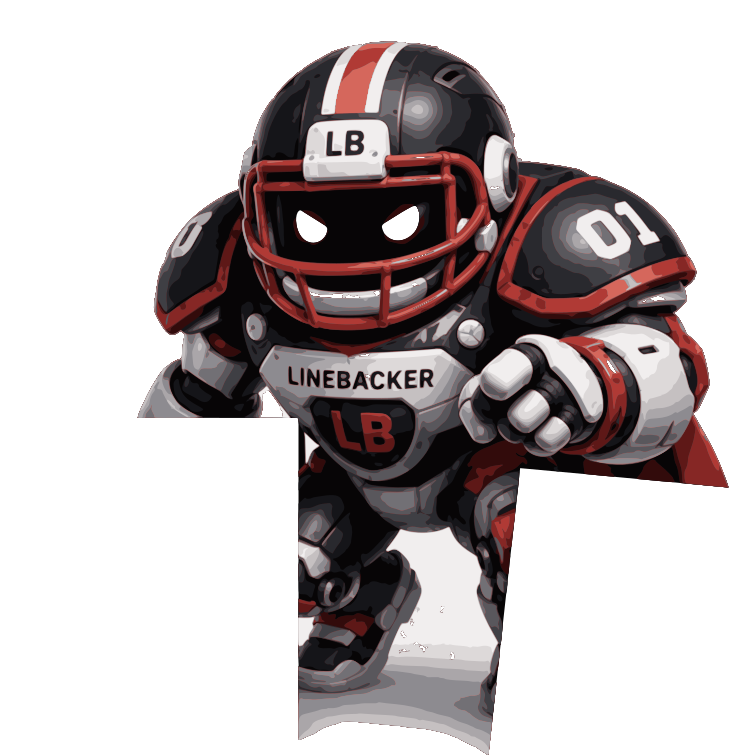
Linebacker reviews a pull request before it merges. It reads the change and the code around it, finds bugs, risky input and security problems, and hands you one clear report.
/tackleRun Linebacker. Protect your code.
In development. Not available yet.

Pull request Open
Tackle report
Risk level: High
Tackle complete. Code is safer now.
AI tools let a developer open more pull requests in a week than a team can read with care. The writing got faster. The reviewing did not.
When review cannot keep up, one of two things happens. Pull requests wait in a queue, or they are approved after a quick look. The quick look is how bugs reach production.
Linebacker is an AI agent that takes the review on. It starts when the pull request opens, reads the whole change, and reports in minutes: on every pull request, at any hour.

Linebacker reads what changed and the context around it.
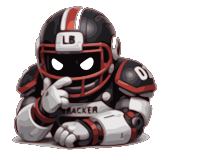

It works out what the code does and what depends on it.
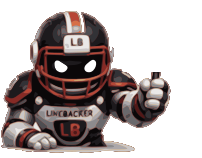

It detects bugs and the risks that could become bugs.

You get a clear report you can act on, with the impact of each finding.
It goes after the defects that break things in production: a missing value, a wrong condition, an error nobody handles.
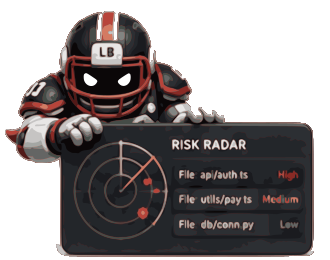
Every changed file gets a risk level, so you know where to look first.

When nothing serious is left, Linebacker says so. A clean pull request gets a clear pass.
Linebacker is not a linter and not one long prompt. It sends a small team of AI agents at the change. Each has one job.
Reads the code around the change: what calls it, what it calls, what data it touches.
Rates every changed file, and the pull request as a whole: high, medium or low risk.
Goes through the new logic line by line, looking for defects and security problems.
Finds the new behaviour that no test covers.
Turns the findings into one report and one call: merge or do not merge.
It remembers the bugs that got through. A bug that got past review goes back to Linebacker, with your team's feedback, as a pattern to look for next time.
Like a referee's signal, the decision is one of three, and everybody on the team reads it the same way.
High risk
Blocking bugs found. Fix them, then run Linebacker again.
Medium risk
Nothing blocks the merge, but there are warnings a person should read first.
Low risk
No blocking bugs found. The pull request is safe to merge.
A review that lists forty comments of equal weight does not help you decide. The tackle report starts with one risk level for the whole pull request, then counts the findings by severity.
/tackle
| A person alone | Linebacker | |
|---|---|---|
| Starts | When a reviewer is free | When the pull request opens |
| Takes | Hours, often a day | Minutes |
| Costs | An hour or more of an engineer | The AI usage of one run: a small part of that hour |
| Reads | The diff, and what there is time for | Every changed line, and the code that depends on it |
| On a large pull request | Skims; the more files, the more gets missed | Reads the last file as closely as the first |
| Accuracy | Nobody counts it | Counted: each finding is marked real or false, and the score is tracked |
Your reviewers keep the calls that need a person: is this the right design, is this what the customer asked for. Linebacker takes the part people do worst, which is reading every line, every time.